

Research and policy for education change
Our research and policy work contributes to change by carrying out high-quality, rigorous, and ethical research into refugee education in the UK and internationally. We work in partnership with young people and draw on lived experience to understand what helps, what gets in the way, and what needs to shift.
We use evidence to help change the landscape around refugee education: strengthening our own programmes, sharing practical learning with the sector, and making the case for improvements in policy and practice.
Through trusted partnerships, clear insights and focused influencing, we help create the conditions for refugee and displaced young people to thrive in education, in the UK and around the world.

Guidance for FE colleges: supporting enrolment and thriving for refugee and asylum-seeking students
This report offers practical guidance to FE practitioners supporting refugee and asylum-seeking students enrol into college.

Asylum statement: impact on education
In November 2026, the UK government published the policy paper: "Restoring Order and Control: A statement on the government’s asylum and returns policy". Although this statement included a commitment to expand education pathways to seek sanctuary in the UK, a number of other measures could potentially have a detrimental impact on the education of refugee and asylum-seeking children and young people in the UK. This report explores these potential negative impacts and provides recommendations to avoid or mitigate these.
Preventing skilled contributions: how young refugees are locked out of apprenticeships
This policy brief, developed by REUK in collaboration with Routes, presents simple and effective policy recommendations to unlock the door to apprenticeship funding for refugees.

Inclusive secondary refugee education in Oxfordshire
This research explores the experiences of displaced children and young people in secondary schools in Oxfordshire. It was commissioned by Oxfordshire County Council, and sought to provide evidence to inform local intervention.
Driving local and transnational policy change in refugee education
Refugee Education UK has been working with Professor Joanna McIntyre at the University of Nottingham to influence policy change around refugee education. As part of this work, we contributed to the development of reports and policy briefs on two key topics that are often overlooked in the field of refugee education: early childhood education and care (ECEC), and inclusive education for refugees with special educational needs and disabilities (SEND).
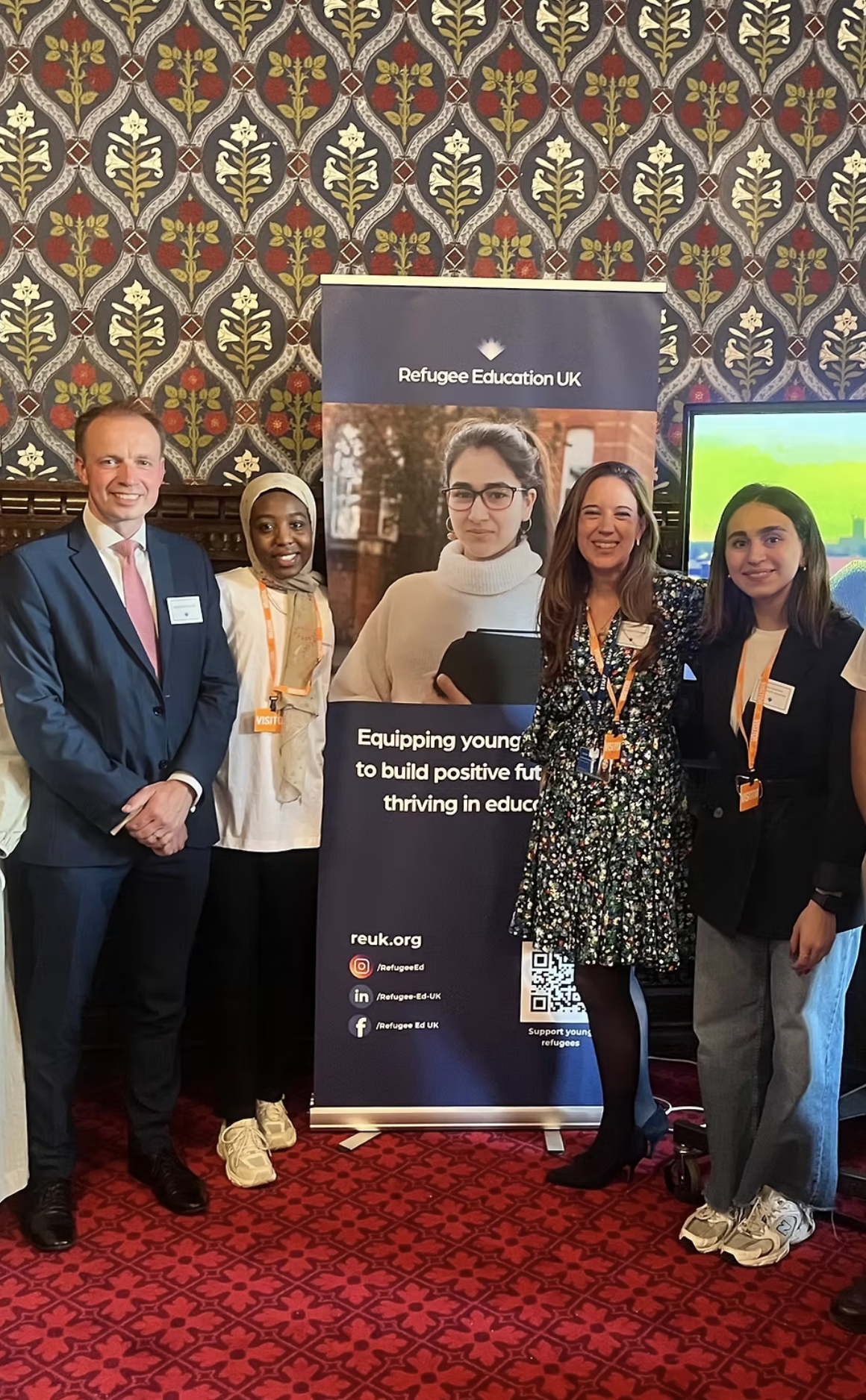
Vision for Refugee Children’s Education in the UK
During Refugee Week 2025, REUK gathered together politicians, policy-makers and education leaders in the Houses of Parliament to launch our Vision for Refugee Children's Education in the UK.
A Sustainable Place for Inclusive Refugee Education (ASPIRE)
A Sustainable Place for Inclusive Refugee Education (ASPIRE) is a research initiative between the University of Nottingham (led by Professor Joanna McIntyre) and Refugee Education UK (REUK). This study focuses on refugee education, by utilising a participatory methodology led by learners with asylum-seeking and refugee backgrounds.

Make or break: reflections on further education enrolment for refugee and asylum-seeking learners
This briefing presents practitioner-based insights from REUK’s experience of supporting young people from refugee and asylum-seeking backgrounds to enrol in further education in September and October 2024.
Getting AHEAD: Access to Higher Education and Academic Development
Refugee Education UK is working with the English and Comparative Literary Studies Department at the University of Warwick to develop a research-led access to Higher Education pilot programme for sanctuary seekers living in the Coventry area.

Inclusive and Sustainable Promising Practices in Refugee Education (InSPPiRE)
Inclusive and Sustainable Promising Practices in Refugee Education (InSPPiRE) is a learning project that seeks to identify and amplify promising practices from case studies of refugee education initiatives in high-income countries. The project incorporates learnings from 29 case studies of initiatives supporting refugee education across 12 high-income settings: Australia, England, Greece, Hong Kong, Italy, Lithuania, Netherlands, Northern Ireland, Scotland, Sweden, the United States of America and Wales.
Experiences of displaced young people living in England: January to March 2023
In 2022, Refugee Education UK, along with the National Institute of Economic and Social Research (NIESR), were commissioned by the Office for National Statistics (ONS) to work on a study that asked displaced young people about their experiences in England - the first of its kind from the ONS. This project was conducted with a team of seven peer researchers (young people with lived experience of forced displacement) to undertake more than 90 interviews with young people, between the ages of 14-18, and their parents up and down England.

Out of Sight, Out of Mind: research on early childhood education and care for the youngest refugee and asylum-seeking children in England
Refugee Education UK partnered with UNICEF UK to undertake research on an under-explored and overlooked topic: the early childhood education and care experiences of the youngest refugee and asylum-seeking children in England – the under 5s. Through listening to the experiences of parents of refugee children and practitioners in the refugee support and early education sectors, our research uncovers the vital importance of quality, contextual and trauma-informed early education for refugee and asylum-seeking babies and young children, and their families.

Sustainable Transformative Inclusive Refugee Education (STRIVE)
Sustainable Transformative Inclusive Refugee Education (STRIVE) is a partnership between Refugee Education UK and the University of Nottingham, that draws upon extensive research of educational policy and provision for refugee learners, and experience of working directly with young people from a forced migration background.

Voices of Refugee Youth: the impact of post-primary education in emergencies
This youth-centred longitudinal panel study focusses on the impact of post-primary education for refugees in Pakistan and Rwanda. The research was conducted in partnership with UNHCR and Jigsaw Education, and concluded in October 2023. This research was funded through the Dubai Cares Evidence for Education in Emergencies (E-Cubed) funding window, and links to UNHCR's efforts to support post-primary education for refugees and host communities.

Late arrivals research: education provision for newly arrived displaced adolescents
Refugee Education UK (REUK), with support from The Bell Foundation, conducted research on access to education for late arrivals - young people, aged 13-19, who have been forcibly displaced from their homes (for reasons including war, conflict, trafficking and persecution) and who arrive in the UK late in the education system. The study was commissioned by The Bell Foundation in response to increased interest from policy makers and practitioners in supporting the needs of these newly arrived displaced adolescents.

Finding Their Way: the journey to university for refugee and asylum-seeking young people in Coventry
This research report from the University of Warwick and Refugee Education UK explores the journey to higher education for refugee and asylum-seeking young people living in Coventry. It is the product of a partnership between Refugee Education UK and the University of Warwick's English and Comparative Literary Studies Department.

The effects of COVID-19 on young refugees’ education and wellbeing: insights from practitioners
This report presents practitioner-based insights from REUK’s experience supporting over 550 refugee and asylum-seeking children and young people through the COVID-19 pandemic. Qualitative consultations took place with 10 frontline staff members, who shared their observations on the educational and wellbeing challenges facing refugee students, aged 14-25. The report aims to highlight the experiences of refugee students to ensure that their needs are prioritised as the UK Government implements their education recovery package.

REUK’s response to the Nationality and Borders Bill
Our response to the Nationality and Borders Bill draws on both our on the ground experience providing direct educational support to over 500 young refugees and asylum seekers, and numerous schools, colleges and universities each year, and on our extensive research into the education, integration and wellbeing of young refugees and asylum seekers, often conducted in partnership with UN agencies.

Education transitions for young refugees and asylum seekers in the UK
Developed with UNICEF UK, REUK's set of advice sheets is designed to help practitioners better support refugee and asylum-seeking young people's education. These advice sheets offer practical tips and guidance for individuals and education institutions for overcoming the challenges that young refugees and asylum seekers face during the transition to further education (FE) and higher education (HE).

EdTech Hub: rapid evidence reviews
COVID-19 resulted in global challenges to formal schooling and increased dependence on educational technology. In this context, the EdTech Hub, a research partnership supported by the UK government and the World Bank, asked REUK to produce rapid evidence reviews on the use of technology in refugee education, education in emergencies and girls' education.